

What to Eat in Essaouira: A Local Food Guide
Essaouira is a city best discovered slowly — through the aroma of bread cooking on a hot griddle, the display of spices and olives in the medina, the morning activity around the fishing port and the dishes shared around a family table.
Its cuisine reflects its location on Morocco’s Atlantic coast and its proximity to the argan-growing countryside. Fresh fish, seasonal vegetables, aromatic herbs, preserved lemons and culinary argan oil all play an important role. Alongside familiar Moroccan dishes such as tagine and couscous, visitors will encounter flavours and food traditions closely connected to Essaouira and its surrounding region.
This guide introduces the dishes, ingredients and everyday food experiences worth discovering during your stay.
Fresh Fish and Seafood
Fish is central to Essaouira’s culinary identity. The port remains one of the city’s most distinctive places, with fishing boats returning with sardines, sea bream, sole, conger eel, squid and other Atlantic catches.
The available selection changes according to the season, the weather and the day’s catch. This is precisely what makes eating fish in Essaouira so interesting: the best choice is often the fish that has arrived that morning.
Grilled sardines are among the simplest and most satisfying options. Served hot with bread, salad or a little cumin and salt, they allow the freshness of the fish to remain the main flavour.
Larger fish may be grilled whole, baked with vegetables or prepared in a tagine.
Before ordering fish
When choosing fish from a market stall or informal restaurant, confirm both the price and the preparation cost before ordering. Depending on the establishment, fish may be priced by portion, by weight or separately from the cooking service.
Moroccan Fish Tagine
A fish tagine is one of the dishes that best connects Moroccan cooking with Essaouira’s Atlantic setting.
Fish is generally combined with vegetables, herbs and chermoula — a fragrant marinade commonly prepared with coriander, parsley, garlic, paprika, cumin, lemon and olive oil. Preserved lemon and olives may also be added.
The dish cooks slowly, allowing the fish and vegetables to absorb the marinade. Every household and cook has a slightly different method: some favour tomatoes and peppers, while others add potatoes, carrots or a more pronounced touch of chilli.
A good fish tagine should taste balanced rather than heavily spiced. The herbs, acidity and seasoning should complement the fish without overwhelming it.
Sardine Kefta Tagine
Sardines are not only eaten grilled. They can also be cleaned, finely chopped and mixed with herbs and spices to create small fish balls known as sardine kefta.
These are usually cooked in a tomato-based sauce, sometimes with peppers, olives or preserved lemon. The result is comforting, economical and full of flavour.
Sardine kefta tagine is an excellent example of Moroccan home cooking: a familiar local ingredient transformed through careful preparation and seasoning.
Couscous: A Dish Made for Sharing
Couscous is eaten throughout Morocco, but it should still have a place in any Essaouira food guide. It is traditionally associated with Friday lunch, when families gather around a large shared dish.
Steamed semolina is served with vegetables and a deeply flavoured broth. Depending on the household, it may include lamb, beef or chicken. Vegetarian versions can be equally generous, with pumpkin, courgettes, carrots, cabbage, turnips and chickpeas.
In the wider Essaouira and Souss region, visitors may also hear about baddaz, a couscous traditionally made with maize semolina. Coastal versions can be prepared with fish and finished with culinary argan oil.
Couscous is not simply a collection of ingredients. Its importance comes from the time required to prepare it and from the custom of sharing it.
Slow-Cooked Moroccan Tagines
Although fish is an obvious choice in Essaouira, the city is also a good place to discover Morocco’s broader tradition of slow-cooked tagines.
Popular combinations include:
-
Chicken with preserved lemon and olives
-
Beef or lamb with prunes and toasted almonds
-
Kefta meatballs with tomato sauce and eggs
-
Seasonal vegetables with herbs and spices
-
Lamb with onions, dried fruit or local honey
The word tagine refers both to the cooking vessel and to the dish prepared inside it. Its conical lid helps retain moisture, allowing ingredients to cook gently and develop concentrated flavours.
The best tagines are rarely rushed. They are built gradually through well-cooked onions, properly balanced spices and ingredients chosen according to the season.
Harira
Harira is a nourishing Moroccan soup made with tomatoes, chickpeas, lentils, herbs and spices. Some versions contain small pieces of meat and vermicelli, while others are completely vegetarian.
It is particularly associated with Ramadan, when it is traditionally served to break the fast, but it can be enjoyed throughout the year.
In Essaouira, harira makes an excellent light lunch or evening meal, especially when accompanied by bread, dates or a freshly cooked msemen.
Every cook gives harira a slightly different consistency and flavour. Some versions are light and aromatic; others are thick enough to be a complete meal.
Msemen and Harcha
For breakfast or an afternoon snack, look for breads and pancakes being prepared on a hot griddle.
Msemen is a layered Moroccan flatbread made by folding and stretching dough with oil or butter. When cooked correctly, it is crisp on the outside and soft between its thin layers. It may be served plain or accompanied by honey, butter, cheese or amlou.
Harcha is made with semolina and has a more crumbly texture. It is generally round, gently cooked on a griddle and served warm.
Both are especially enjoyable with mint tea. Watching them being shaped and cooked is part of the experience.
Amlou and Culinary Argan Oil
Essaouira lies close to Morocco’s argan-growing region, making culinary argan oil one of the ingredients visitors should discover.
Unlike cosmetic argan oil, the culinary version is made from roasted kernels. It has a distinctive toasted, nutty flavour and can be served with bread, used to dress dishes or incorporated into regional recipes.
Amlou is a rich spread traditionally prepared with ground roasted almonds, culinary argan oil and honey. It is commonly served at breakfast or with afternoon tea.
Its texture varies from fluid and grainy to smooth and thick. The flavour should reveal the roasted almonds and argan oil, with honey providing sweetness without dominating the mixture.
When buying culinary argan oil or amlou, choose a reputable producer or cooperative and check that the product is intended for eating.
Moroccan Bread
Bread accompanies almost every traditional Moroccan meal. It is used not only as a side dish but also to pick up vegetables, sauce and pieces of meat or fish from a shared plate.
Round Moroccan loaves are generally firm enough to hold a generous tagine sauce while remaining soft inside. Other breads may contain semolina, whole wheat or barley.
Fresh bread is widely available in Essaouira’s neighbourhood bakeries, medina stalls and markets. Its quality is often best earlier in the day, when loaves are still warm.
Bread also carries an important social meaning. Sharing bread around the same dish is part of the hospitality and collective nature of Moroccan dining.
Olives and Preserved Lemons
Essaouira’s markets offer olives in many colours, sizes and preparations. Some are mild and buttery; others are salted, spiced or flavoured with herbs and chilli.
Preserved lemons are another cornerstone of Moroccan cooking. Their salty, aromatic rind is used in tagines, salads and marinades. Only a small quantity is needed to transform a dish.
Market stalls selling olives and preserved lemons are worth visiting even if you are not planning to cook. They provide a vivid introduction to the flavours used in local kitchens.
Moroccan Salads
A Moroccan meal may begin with several small cooked and raw salads rather than a single starter.
Common examples include:
-
Zaalouk, made with aubergine, tomato, garlic and spices
-
Taktouka, prepared with cooked peppers and tomatoes
-
Carrots seasoned with cumin, garlic and lemon
-
Beetroot salad
-
Tomatoes and cucumbers with herbs
-
Lentils or white beans dressed with spices
These salads are generally served at room temperature and shared with bread. Their flavours may be smoky, tangy, sweet or gently spiced.
They are also an excellent option for vegetarian travellers, although it is always advisable to ask whether meat stock has been used.
Pastilla
Pastilla is one of Morocco’s most elaborate celebratory dishes. It combines very thin pastry with a carefully seasoned filling and a contrast between savoury and sweet flavours.
The classic version is often prepared with poultry, eggs, almonds, cinnamon and sugar. Coastal restaurants may offer seafood pastilla filled with fish, prawns, squid, vermicelli and herbs.
Seafood pastilla is richer and more complex than a simple grilled fish dish. It is best shared, particularly as part of a larger meal.
Because its preparation requires several stages, pastilla is also an interesting dish to explore during a Moroccan cooking class.
Sfenj and Moroccan Pastries
Sfenj is a light ring of fried dough, often described as a Moroccan doughnut. It is generally eaten plain or with sugar and is particularly enjoyable while still warm.
In bakeries and pastry shops, visitors will also encounter almond biscuits, coconut macaroons, ghriba and honeyed pastries. During Ramadan, chebakia — flower-shaped pastries coated in honey and sesame — becomes especially prominent.
Moroccan sweets are usually served in small portions with tea or coffee. Their richness makes them well suited to slow tasting rather than hurried snacking.
Moroccan Mint Tea
Mint tea is much more than a drink. It represents welcome, conversation and hospitality.
It is prepared with green tea, fresh mint and sugar, although the sweetness can vary considerably. The tea is traditionally poured from above, helping cool it and creating a light layer of foam in the glass.
Accepting tea in a home, workshop or small shop can open the door to an unplanned conversation. These informal moments are often as memorable as the food itself.
If you prefer less sugar, it is best to ask before the tea is prepared.
Where to Discover Essaouira’s Food
Different places reveal different aspects of the city’s food culture.
The fishing port
Visit in the morning to observe the day’s catch and the activity surrounding the fishing boats. Conditions and access can vary, so remain attentive to working areas.
The medina markets
The markets around the medina are useful for discovering vegetables, fruit, herbs, olives, preserved lemons, spices, bread and household ingredients.
Small local restaurants
Simple establishments frequently specialise in only a few dishes. A short menu can be a good sign, particularly when the food is prepared fresh each day.
Family-hosted experiences
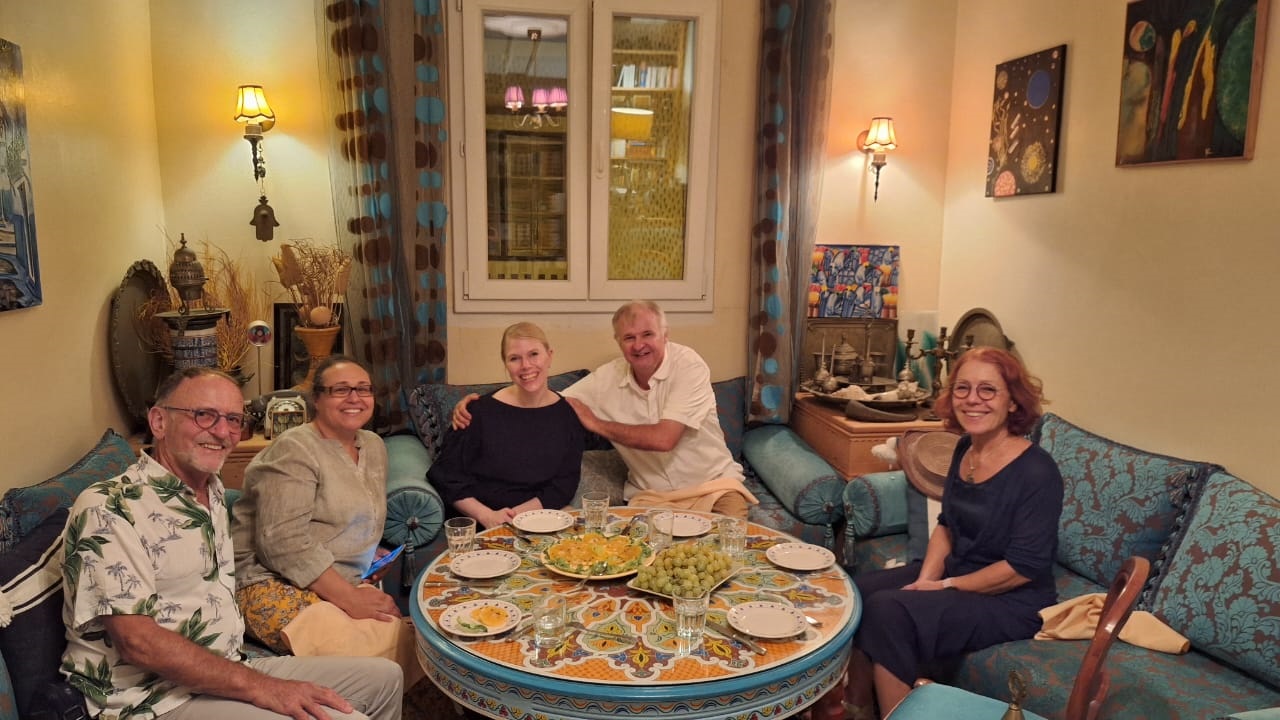
Eating or cooking with a local host offers something a restaurant cannot always provide: an explanation of everyday methods, family preferences and the role a dish plays within Moroccan life.
Cooking classes and market visits
A well-designed culinary experience can help visitors understand how ingredients are selected, why spices are combined in particular ways and how traditional dishes are constructed step by step.
Eating Respectfully and Responsibly
Essaouira’s food culture is generous, but visitors should approach it with curiosity and respect.
Ask permission before photographing vendors or cooks. Confirm prices before ordering unpriced fish or market products. Be clear about allergies and dietary restrictions, especially when eating in a private home.
It is also worth remembering that traditional recipes are not completely standardised. Two families may prepare the same dish differently, and both versions can be authentic.
The aim is not to find a single definitive recipe, but to understand the people, ingredients and traditions behind the food.
Experience Essaouira Through Its Food
Essaouira rewards travellers who look beyond a list of restaurants. Its culinary identity is found in the morning catch, the neighbourhood bakery, the vegetables selected at the market, the patience required for a tagine and the tea poured for a guest.
Try the grilled fish, but also make time for harira, msemen, amlou, seasonal salads and a properly prepared couscous. Visit the markets, ask questions and, whenever possible, learn directly from the people who cook these dishes in their daily lives.
Food is not simply one of Essaouira’s attractions. It is one of the most meaningful ways to understand the city.