

Traditional Dishes to Try in Essaouira
Essaouira’s cuisine is shaped by two worlds. The Atlantic Ocean supplies the city with fresh fish and seafood, while the surrounding countryside provides vegetables, herbs, grains, almonds, honey and argan oil.
This combination gives Essaouira a culinary identity that is both distinctly Moroccan and closely connected to its coastal location. Some dishes are found throughout the country but take on a different character here; others reflect the traditions of the wider Essaouira and Souss region.
From grilled sardines to slow-cooked tagines, here are the traditional dishes worth trying during your stay.
1. Grilled Sardines
Sardines are among the most emblematic foods of Morocco’s Atlantic coast. In Essaouira, they are appreciated for their freshness, simplicity and strong connection to the working fishing port.
Fresh sardines require very little preparation. They may be lightly seasoned with salt and cumin before being grilled over charcoal. Some cooks fill them with a mixture of coriander, parsley, garlic and spices before cooking.
They are generally served with Moroccan bread, tomato and onion salad, or a simple garnish of lemon.
Grilled sardines are best eaten soon after cooking. Their appeal lies in their freshness rather than elaborate presentation.
Why try them in Essaouira?
Essaouira’s port provides direct access to the Atlantic catch. Availability depends on the season, the weather and what local boats bring ashore that day.
2. Moroccan Fish Tagine
Fish tagine combines the slow-cooking tradition of Moroccan cuisine with the produce of the Atlantic coast.
The fish is commonly marinated in chermoula, a preparation made with coriander, parsley, garlic, cumin, paprika, lemon and oil. It is then cooked with vegetables such as potatoes, tomatoes, carrots and peppers.
Olives and preserved lemons may be added to provide saltiness and acidity.
Every cook has a personal version. Some favour a generous tomato sauce, while others allow the herbs and natural juices of the fish to provide most of the moisture.
A successful fish tagine should preserve the texture of the fish while allowing the vegetables to absorb the chermoula.
3. Sardine Kefta Tagine
Sardine kefta tagine is one of the most interesting ways to discover Morocco’s relationship with this modest but highly valued fish.
The sardines are cleaned, finely chopped and mixed with herbs, garlic and spices. The mixture is shaped into small balls and cooked in a tomato sauce, sometimes with peppers, olives or preserved lemon.
The dish combines the intensity of oily fish with the freshness of herbs and the warmth of Moroccan spices.
It is especially representative of home cooking, where affordable local ingredients are transformed through time and careful preparation.
4. Baddaz: Regional Maize Couscous
Most visitors are familiar with couscous made from wheat semolina. In the Essaouira and Souss regions, however, they may encounter baddaz, a traditional couscous made with maize semolina.
Its texture is slightly more rustic than conventional couscous. Depending on the family and the area, it can be served with vegetables, meat or fish.
Coastal versions may incorporate fish or seafood and culinary argan oil, bringing together several characteristic products of the region.
Baddaz is not available in every restaurant. It is more likely to be encountered in a family setting, at a traditional guest table or as part of a culinary experience focused on regional cooking.
5. Friday Couscous
Couscous is eaten throughout Morocco, but its cultural importance makes it essential for anyone wishing to understand the country’s food traditions.
It is particularly associated with Friday lunch, when families gather after the weekly prayer. The dish is prepared for sharing and placed at the centre of the table.
Steamed semolina is accompanied by vegetables and broth, sometimes with lamb, beef or chicken. Chickpeas, carrots, courgettes, pumpkin, turnips and cabbage are common, although the composition changes with the season.
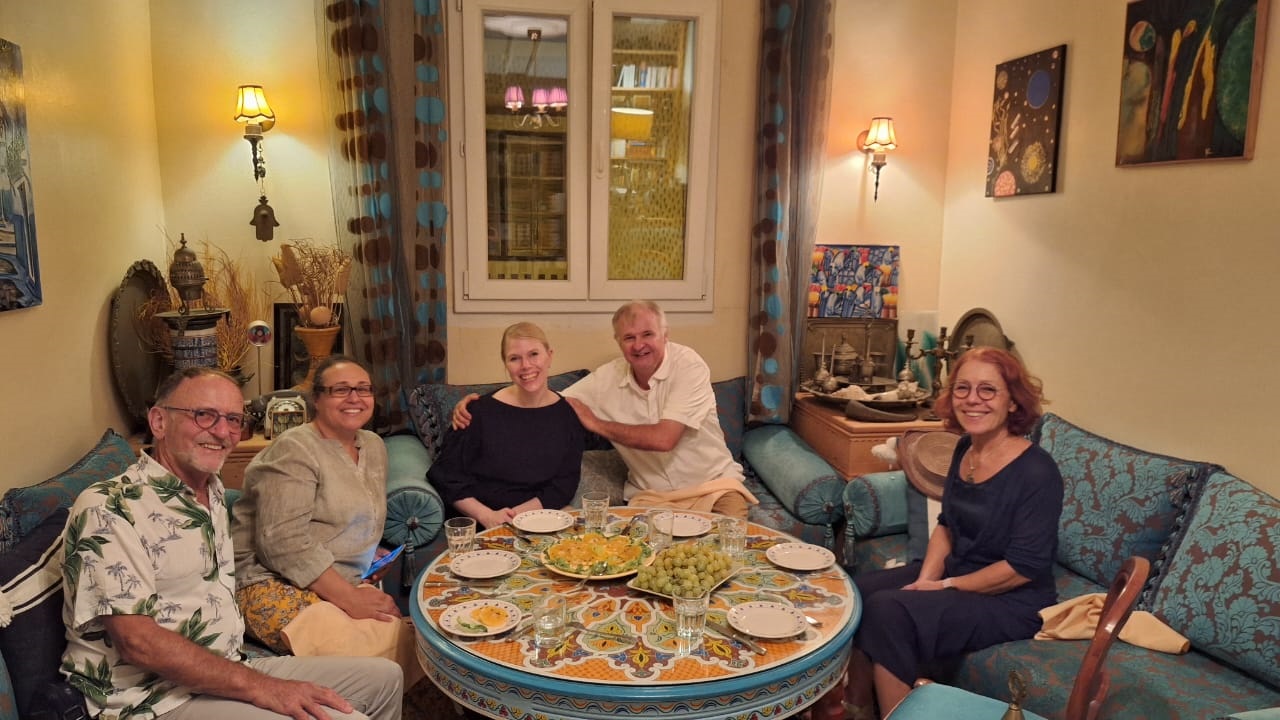
Couscous should not be considered only as a restaurant dish. Its meaning comes from collective preparation, generosity and the custom of eating together.
If you have an opportunity to enjoy couscous with a local family, the experience will often be more revealing than ordering an individual portion in a tourist restaurant.
6. Chicken Tagine with Preserved Lemon and Olives
Chicken with preserved lemon and olives is one of Morocco’s best-known tagines.
The chicken is slowly cooked with onions, herbs, spices and a small quantity of preserved lemon. Green or violet olives are generally added towards the end of cooking.
Preserved lemon is much more aromatic and salty than fresh lemon. Only part of the rind is needed to flavour the entire dish.
The result should balance the richness of the chicken, the sweetness of the cooked onions, the acidity of the lemon and the saltiness of the olives.
Although this dish is not exclusive to Essaouira, it provides an excellent introduction to the techniques and ingredients used in Moroccan family cooking.
7. Lamb or Beef Tagine with Prunes
Moroccan cuisine often combines savoury meat with dried fruit, honey and warm spices.
In a tagine with prunes, lamb or beef is slowly cooked until tender. The prunes are prepared separately or added later, then finished with cinnamon, honey, sesame seeds or toasted almonds.
The dish is rich and gently sweet rather than resembling a dessert. Ginger, turmeric, pepper and cinnamon give depth to the sauce.
This type of tagine is frequently associated with celebrations, family gatherings and special occasions. It is a good choice for travellers interested in Morocco’s characteristic balance between sweet and savoury flavours.
8. Kefta Tagine with Eggs
Kefta tagine is prepared with small seasoned meatballs, generally made from beef or lamb.
The meatballs are cooked in a tomato sauce flavoured with garlic, cumin, paprika and herbs. Eggs may be broken directly into the tagine shortly before serving.
It is a comforting, accessible dish that is commonly eaten with bread. The bread is used to pick up the meatballs, eggs and sauce from the shared serving dish.
Kefta tagine is widely available and makes a useful alternative for travellers who have already tried several chicken or fish dishes.
9. Seafood Pastilla
Pastilla is one of Morocco’s most refined culinary preparations. It consists of very thin pastry enclosing a carefully seasoned filling.
The traditional poultry version combines meat, eggs, almonds, cinnamon and sugar. In coastal cities such as Essaouira, seafood pastilla is particularly relevant.
It may contain white fish, prawns, squid, rice vermicelli, mushrooms, herbs and spices. The pastry should remain crisp while the filling stays moist and aromatic.
Seafood pastilla requires several stages of preparation, which explains why it is often reserved for celebrations or shared meals.
It is generally quite rich, so one pastilla can be shared between several people as a starter or as part of a larger meal.
10. Harira
Harira is a traditional Moroccan soup made with tomatoes, chickpeas, lentils, herbs and spices.
Some versions include meat and vermicelli, while others are vegetarian. Its consistency ranges from relatively light to thick and substantial.
Harira is strongly associated with Ramadan, when it is served to break the fast. However, it can be found throughout the year in small restaurants and family kitchens.
In Essaouira’s cool and windy evenings, a bowl of hot harira can be particularly welcome. It is often eaten with bread, dates, boiled eggs or a piece of msemen.
Because every household prepares harira differently, tasting several versions can reveal considerable variation in texture and seasoning.
11. Moroccan Salads
A traditional Moroccan meal may begin with several small salads placed around the table.
Unlike many European salads, a large proportion of Moroccan salads are cooked. They are usually served at room temperature and eaten with bread.
Look for:
-
Zaalouk: aubergine cooked with tomatoes, garlic, cumin and paprika
-
Taktouka: roasted or cooked peppers with tomatoes and spices
-
Carrot salad: cooked carrots seasoned with cumin, garlic and lemon
-
Beetroot salad: diced beetroot with herbs and a light dressing
-
Lentil salad: lentils cooked with onions, herbs and spices
-
Tomato and cucumber salad: a fresh accompaniment to grilled dishes
Ordering a selection is an excellent way to discover Moroccan vegetables and seasoning before the main course.
12. Msemen
Msemen is a layered Moroccan flatbread prepared from dough that is stretched, folded and cooked on a hot griddle.
The outside becomes lightly crisp while the folded layers remain soft and chewy. It can be eaten plain or served with butter, honey, cheese or amlou.
Freshly cooked msemen is commonly enjoyed at breakfast or with afternoon tea. Savoury stuffed versions may contain onions, spices, herbs or minced meat.
The preparation looks simple but requires considerable skill. The thin dough must be stretched without tearing and folded evenly to produce its characteristic layers.
13. Harcha
Harcha is a round semolina bread with a tender, slightly crumbly texture.
It is cooked on a griddle and usually served warm. Compared with msemen, harcha is less layered and often less oily.
It can be eaten with:
-
Butter and honey
-
Soft cheese
-
Olive oil
-
Culinary argan oil
-
Amlou
Harcha is particularly suited to breakfast or a light snack with tea. Its mild flavour makes it an ideal base for richer accompaniments.
14. Amlou
Amlou is one of the essential tastes of southern Morocco and the argan-producing region surrounding Essaouira.
The traditional preparation combines roasted almonds, culinary argan oil and honey. The ingredients are ground and mixed into a rich spread.
Amlou is sometimes compared to almond butter, but its toasted flavour and the character of argan oil make it quite distinctive.
It is usually served with bread, msemen or harcha at breakfast or during afternoon tea.
The quality of amlou depends heavily on its ingredients. Traditional almond amlou is generally more refined and expensive than versions made with peanuts or other oils. If possible, ask about its composition before buying.
15. Culinary Argan Oil
Argan oil intended for cooking is produced from roasted argan kernels, giving it a deep golden colour and toasted, nutty flavour.
It can be served with bread, added to couscous or used to finish salads and regional dishes. It should not be confused with cosmetic argan oil.
The Essaouira countryside is home to argan trees and cooperatives producing both culinary and cosmetic oils. Visiting a reputable cooperative can help travellers understand the lengthy process required to extract the oil.
Because authentic argan oil requires significant work and raw material, unusually cheap products should be treated with caution.
16. Sfenj
Sfenj is a traditional Moroccan ring of fried dough with a light, irregular and spongy texture.
It may be eaten plain, sprinkled with sugar or dipped in honey. It is best enjoyed soon after frying, while the exterior is still crisp.
Sfenj is commonly associated with breakfast or afternoon tea. It is an everyday food rather than an elaborate pastry, and part of its charm comes from watching the dough being shaped and fried.
A warm sfenj accompanied by mint tea makes a simple and satisfying break while exploring the medina.
17. Moroccan Pastries
Essaouira’s bakeries and pastry shops offer a wide variety of small Moroccan sweets.
Popular examples include:
-
Almond ghriba
-
Coconut macaroons
-
Kaab el ghazal, or gazelle horns
-
Fekkas, a crunchy sliced biscuit
-
Chebakia with honey and sesame
-
Makrout filled with dates
The selection changes according to the season and religious calendar. Chebakia, for example, is particularly associated with Ramadan.
Moroccan pastries are often dense with almonds, sesame, dates or honey. They are usually served in small quantities with tea rather than eaten as a large dessert.
18. Moroccan Mint Tea
No culinary exploration of Essaouira would be complete without mint tea.
It is prepared with green tea, fresh mint and sugar, then poured into small glasses. The sweetness varies considerably, but traditional tea can be very sweet.
Tea accompanies breakfast, snacks, business discussions, family visits and moments of welcome. Its importance is social as much as culinary.
When tea is offered in a home or during a cooking experience, it marks the beginning of hospitality and conversation.
How to Choose What to Eat
The best choice often depends on the setting.
At the port or near the fish market, ask what arrived that morning. In the medina, look for stalls preparing msemen, harcha, harira or sfenj in front of customers. For couscous, pastilla and slow-cooked tagines, choose places that prepare a limited number of dishes rather than an excessively long menu.
A few useful principles can improve the experience:
-
Confirm the price of fish before it is cooked.
-
Ask whether a dish must be ordered in advance.
-
Mention allergies and dietary requirements clearly.
-
Choose food that is freshly prepared and served hot.
-
Ask permission before photographing cooks or vendors.
-
Accept that recipes vary between families and establishments.
Variation is part of Moroccan culinary culture. There is rarely a single definitive version of a traditional dish.
Discover the Stories Behind the Dishes
Tasting these dishes is an excellent introduction to Essaouira, but learning how they are prepared offers a deeper understanding.
A market visit can reveal how cooks select fish, vegetables, spices and preserved ingredients. A cooking class can explain how chermoula is balanced, how couscous is steamed or how thin pastry is folded around a pastilla.
Most importantly, meeting local cooks shows how recipes are connected to family life, hospitality, celebrations and the changing seasons.
Essaouira’s traditional food is not defined by one famous dish. Its identity emerges from the relationship between the Atlantic coast, the argan countryside, the medina markets and the people who continue to cook and share these recipes.